Doyou and Mabi: Japan's Seasonal Threshold Faith for Health and Fortune at the Turn of the Year
Explore the origins of Doyou, the earth deity Dokojin, and the meaning of Mabi in Japanese tradition. Learn how the nation's seasonal threshold rituals support health, home care, and modern self-care.
Origins of Doyou and the Earth Deity Dokojin
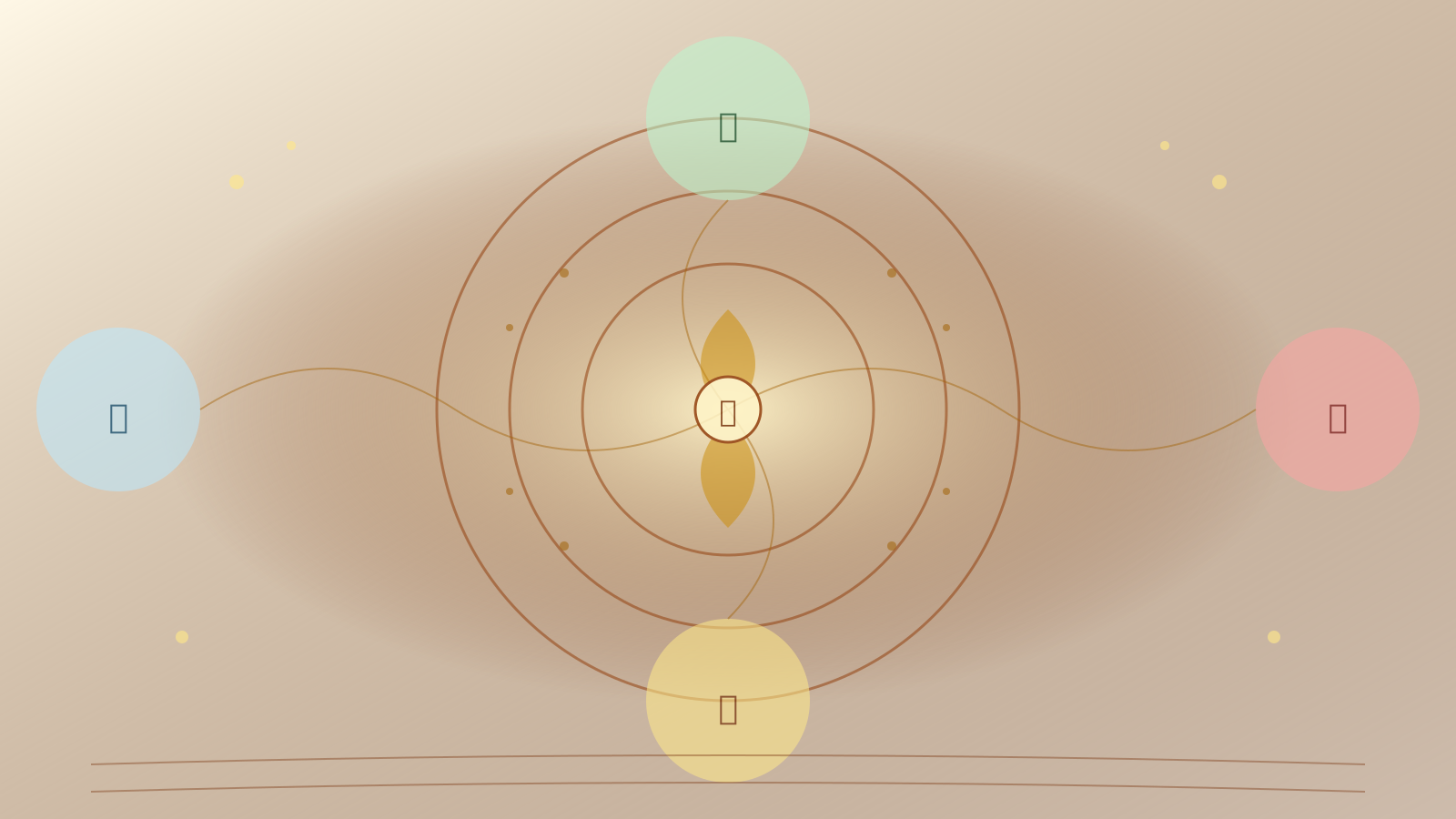
The word doyou often evokes, for many Japanese, the summer custom of eating eel on the Day of the Ox. Originally, however, doyou refers to the roughly eighteen-day periods just before risshun, rikka, risshuu, and ritto — the four traditional starts of the seasons. These four sacred thresholds come four times a year, and the deity who governs them is Dokojin, the god who dwells within the earth itself. Japanese tradition has long revered this deity.
The idea of doyou comes from the ancient Chinese thought of yin-yang and the Five Phases. In this system, all things are explained through the five qi of wood, fire, earth, metal, and water. Spring corresponds to wood, summer to fire, autumn to metal, and winter to water. Earth, the fifth, has no season of its own, so eighteen days at the close of each season were assigned to earth, giving seventy-two days of doyou in a year. The framework reached Japan in the Heian period and was systematized into court rituals by the onmyoji masters of the yin-yang tradition.
Dokojin governs digging, building, and moving earth. During doyou, such actions were avoided: well-digging, foundation work, the moving of gravestones, or large garden renovations could provoke the deity's displeasure. Even today, the Japanese construction industry retains a strong habit of avoiding ground-breaking ceremonies during doyou, and Shinto priests across the country advise, "Please refrain from disturbing the earth during doyou."
Mabi: The Buffer Days Hidden Within the Taboo
Not every day of doyou is forbidden. Within each doyou period, a few days are set aside as mabi, or buffer days, on which moving earth does not incite the deity. Each season has different mabi: the spring doyou names the days of the Snake, Horse, and Rooster; the summer doyou the Rabbit, Dragon, and Monkey; the autumn doyou the Sheep, Rooster, and Pig; the winter doyou the Tiger, Rabbit, and Snake.
Why provide escape hatches within a taboo period? The folklorist Noboru Miyata called it Japanese practical wisdom. Halting farming and building for a full eighteen days is not compatible with everyday life. By naming mabi as buffer days, the culture allowed necessary work to continue while still avoiding offense. A flexible form of faith was born.
This structure contains a lesson still relevant today. Building exceptions into strict rules keeps a system alive over time — a principle confirmed by organizational theory and behavioral economics. The balance of taboo and allowance is part of why this tradition has survived more than a thousand years.
The Four Doyou and the Body's Rhythm: Links With Eastern Medicine
In Eastern medicine, doyou periods are times when the spleen, which governs digestion and absorption, needs particular care. Seasonal transitions often bring illness because the spleen takes on an added burden. Eating nourishing foods during doyou is less a superstition and more a practical wisdom that follows the rhythm of the body.
The well-known custom of eating eel on the Day of the Ox in summer has medical support. Eel is rich in vitamin B1, which counteracts the slowdown in carbohydrate metabolism that contributes to summer fatigue. The custom, popularized by the Edo-period scholar Hiraga Gennai, was partly a scheme to lift eel-shop sales during the midsummer heat, but it was also medically sensible.
Spring doyou calls for foods starting with the sound i, such as ichigo, iwashi, and ika. Autumn doyou favors foods starting with ta, such as tamago, daikon, and tai. Winter doyou honors foods starting with hi, such as hirame, hijiki, and hiyoko-mame. In each case, the seasonal list naturally supplies the nutrients the body needs at that moment. This runs deep through Japan's seasonal cooking.
What the Author Felt at the Turn of a Season
Many of us feel under the weather at the turn of a season. For years I quietly struggled with fatigue and poor focus in early spring and early autumn. One year, during what turned out to be the autumn doyou, I realized on the morning commute that a chill was sitting deep inside me. That evening I deliberately ate a miso soup with root vegetables, a warm rice bowl, and went to bed early, and the lightness I felt the next morning surprised me.
Once I learned the idea of doyou, I began to avoid pushing myself at seasonal turns. On an evening when nothing at work seemed to resolve, doing nothing more than postponing a new challenge or a major decision during doyou turned out to protect me more than I expected. In a passing family conversation, my mother once said, "Long ago, people made days when they did not disturb the earth so that we would not overreach at the turn of a season." That small remark returns to me at every threshold of the year.
What to Avoid and What to Do During Doyou
Traditionally, three actions are to be avoided during doyou. First, disturbing the earth: garden construction, well-digging, foundation work, and the placing of gravestones are said to offend Dokojin. Second, starting something new: opening a business, moving house, changing jobs, or registering a marriage are traditionally avoided during doyou. Third, long journeys: the body is already vulnerable, so unnecessary travel is discouraged.
Three practices, on the other hand, are encouraged during doyou. First, ordering the inside of the home. Although disturbing the soil is taboo, tidying and letting go of what no longer belongs is welcomed. Second, caring for the body. Health check-ups, acupuncture, and massage fit the season. Third, reflection and planning. Rather than launching something new, quietly drawing up a plan for the next season is ideal.
Doyou is a period of gathering strength through not moving. Those who pass this quiet time with care, it has long been said, begin the next season with stronger momentum. This wisdom is also supported by modern physiology and psychology. Seasonal changes bring swings in temperature, air pressure, and daylight hours that the autonomic nervous system cannot always keep up with. The Japan Society of Autonomic Nervous System research reports that late February to mid-March, which aligns with spring doyou, and late October to mid-November, which aligns with autumn doyou, are the times of year when people report the most physical and mental complaints.
Research from Harvard Medical School shows that people who schedule periods of rest face a risk of chronic fatigue more than forty percent lower than those who do not. By creating a period that society itself labels as a time to rest, doyou hands even the overworked a permissible excuse to stop. A seemingly negative taboo has functioned as a shield protecting mind and body — which is why it has endured.
A cognitive psychology team at Cambridge University has also found that people who regularly pause their decisions for a set period show higher long-term decision quality. The doyou taboo against starting new things effectively reduced impulsive moves and made room for deliberation.
Practices for Welcoming Doyou Into Modern Life
Here are concrete ways to live with doyou today. First, keep a doyou calendar. Add the four doyou periods of roughly eighteen days each into your phone's calendar and commit to avoiding major decisions or contracts during those windows. This quiet rule alone increases the number of unforced judgments you make.
Second, clean up before doyou begins. In the weekend before each doyou, lightly tidy the home and finish wardrobe changes and major shopping. This prepares you to spend doyou quietly and to greet the next season smoothly when doyou ends.
Third, eat in rhythm with the season. Intentionally including the foods traditionally recommended for each doyou reduces the autonomic system's burden. Eel in summer, root vegetables in autumn, and warm soups in winter all line up with what science recognizes as season-appropriate nutrition.
Fourth, use mabi deliberately. If you absolutely must take action during doyou, scheduling it on a mabi day allows you to honor the tradition and meet practical needs at once. Construction and moving specialists still consult mabi — not out of superstition, but because the habit of noticing thresholds brings more careful work.
What Dokojin and Doyou Ask of Us
The faith of doyou teaches a truth for today: those with the courage to stop gather fortune. In a society that constantly praises forward motion, expansion, and challenge, deliberately pausing at thresholds to tend the body and renew one's plans is precisely what prepares one to draw out the most from the next season.
Dokojin also stands for respect for the earth. Our lives rest on crops, water, and minerals that come from the ground. Four times a year, we can let go of the sense that such gifts are simply there and remember to thank them. This stance returns us to a starting point needed for our contemporary reckoning with environmental and food challenges.
When the next doyou arrives, try spending even one day more quietly than usual. Make no large plans, tidy the house, eat a warm meal, and sleep early. Just that opens your body and mind to a thousand years of Japanese wisdom. In a world that insists on constant motion, choosing to stop on purpose is, in fact, the surest art of long-term fortune.
About the Author
Japanese Gods Encyclopedia Editorial TeamWe share the stories and teachings of Japanese gods in a way that is easy to understand and applicable to modern life.
View author profile →Related Articles
The Storehouse Deity: Guardians of Family Wealth in Japanese Kura and the Wisdom of Saving with Gratitude
Himuro Shrine: The Sacred Ice Halls That Teach Gratitude, Health, and the Coolness of Summer Prayer
The Broom Deity: Sweeping Tools, Sacred Rites, and Wisdom of Clearing Life's Path
The Lavatory Deity and Ususama Myoo: Wisdom of Purification and Prosperity in the Bathroom